Read — or listen to — Nature and arXiv without the physics PhD.
Every paper, decoded to the depth you choose, linked to the object it's about, and ready as an audio briefing — so you can read it, look up, or just listen.
Free plan, no credit card.
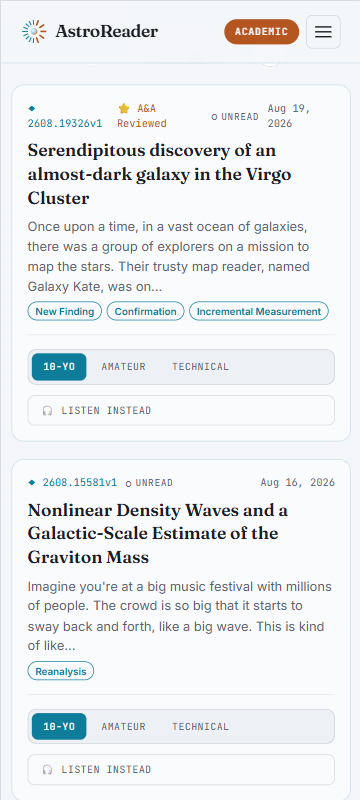
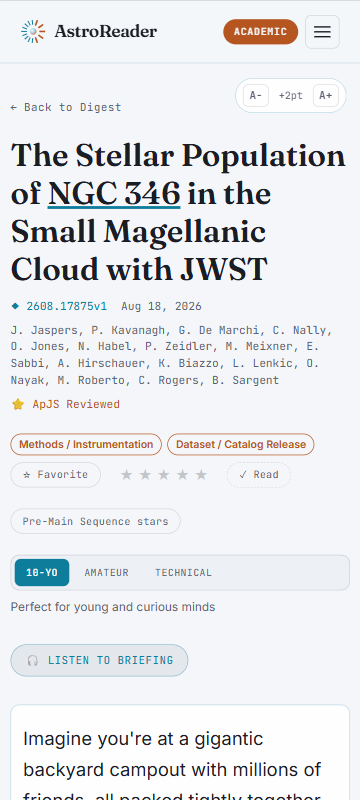
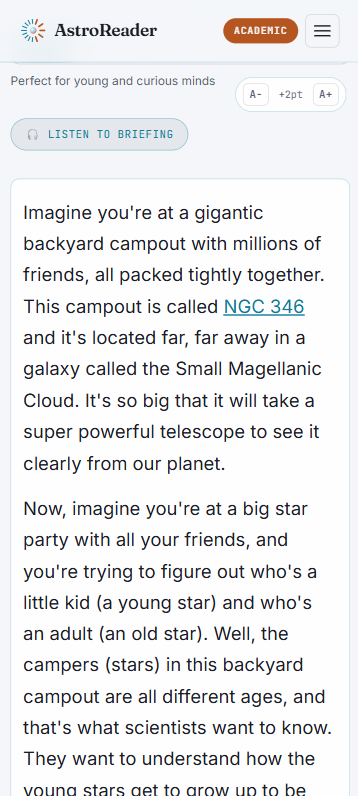
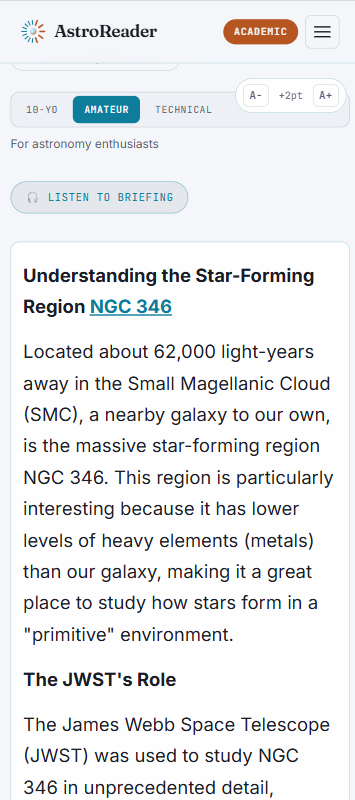
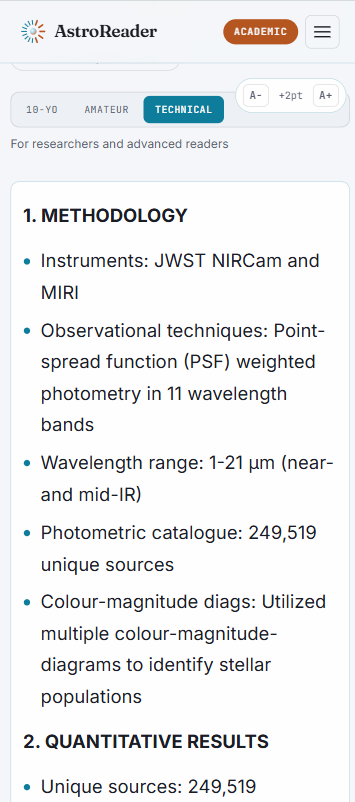
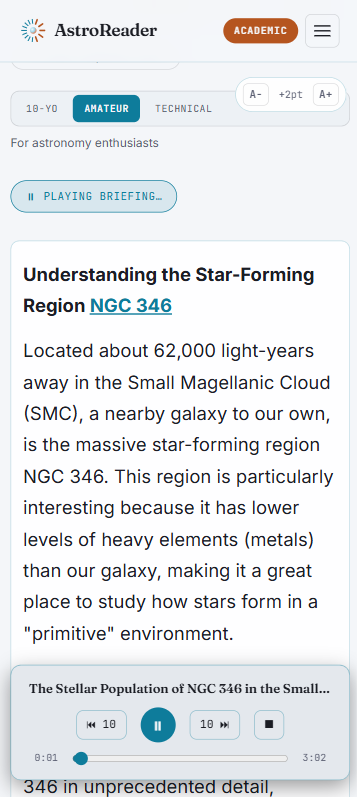
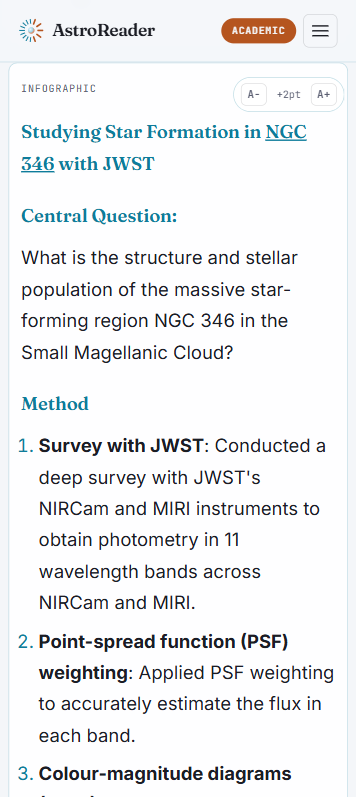
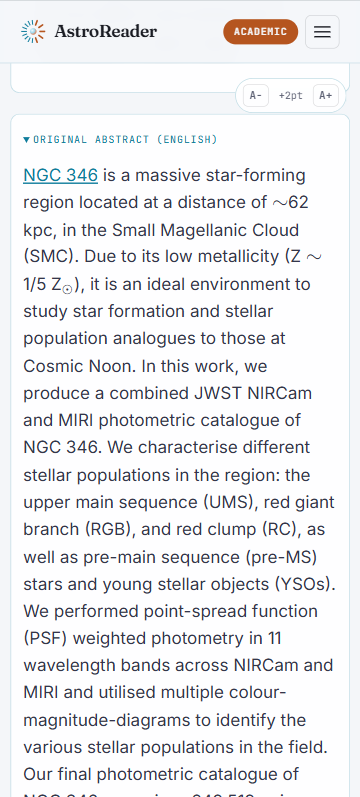
One paper. Three depths.
Switch the comprehension tab — the translation updates in real time.
Every screen, in order
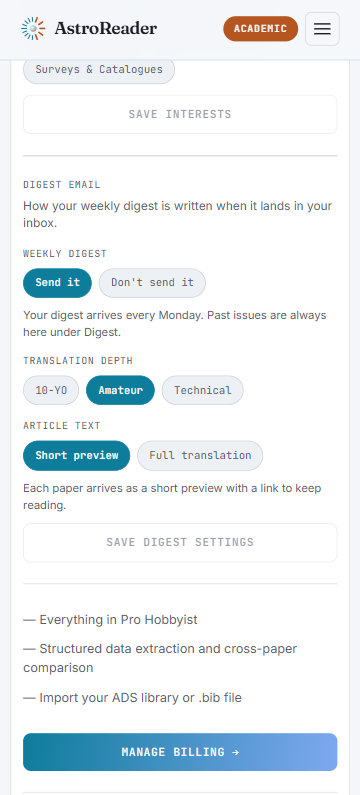
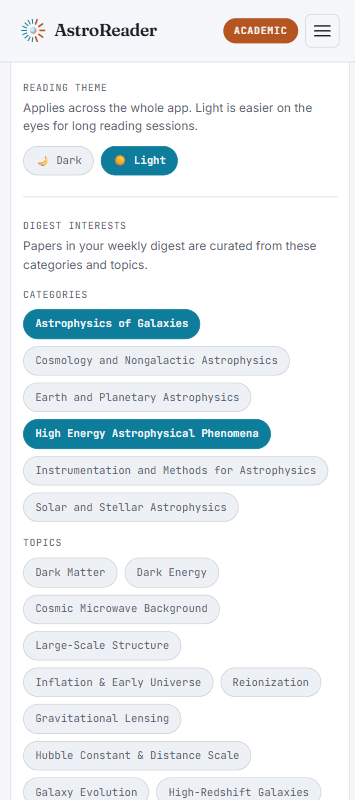
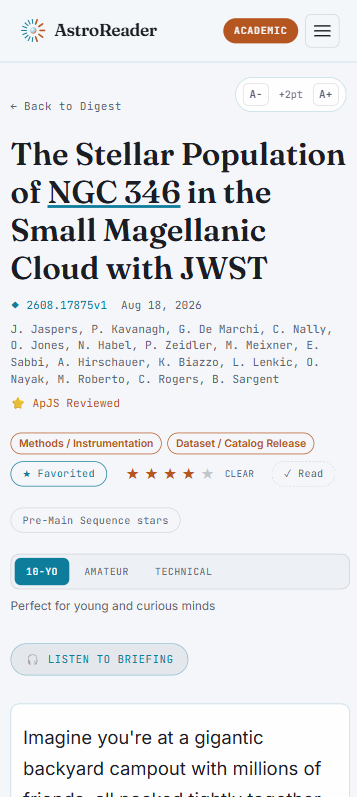
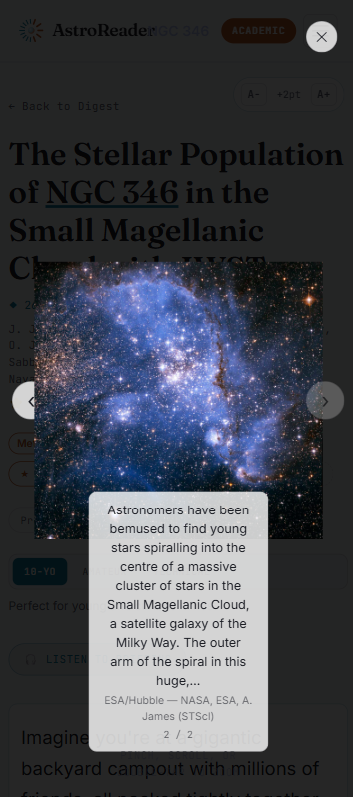
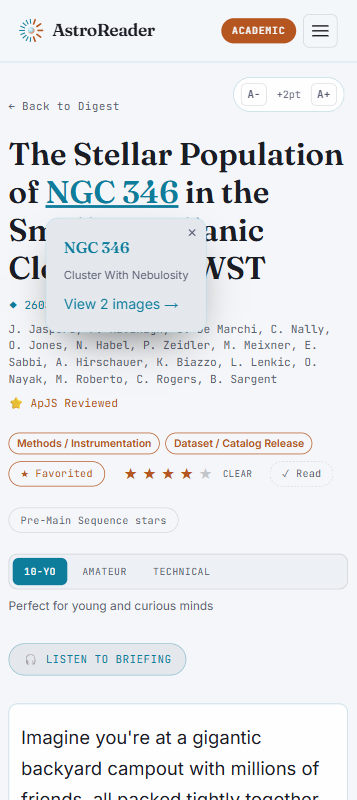
Every image below is an actual capture of the live app, oldest to newest — nothing here is a mockup.
Nine ways to keep up with the sky
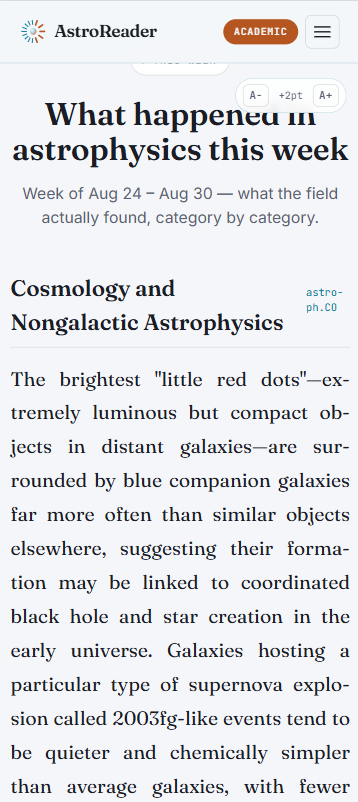
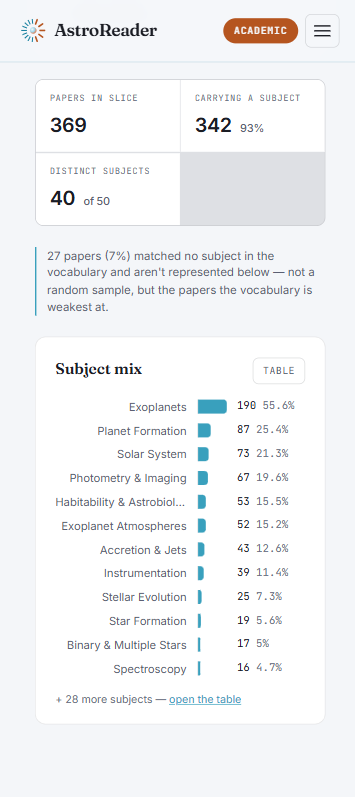
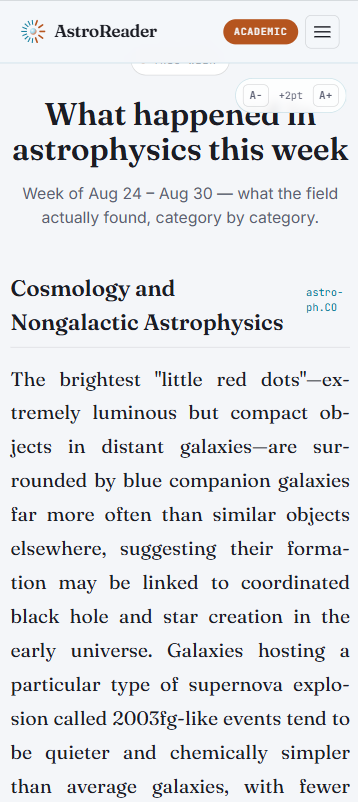
Weekly Recap
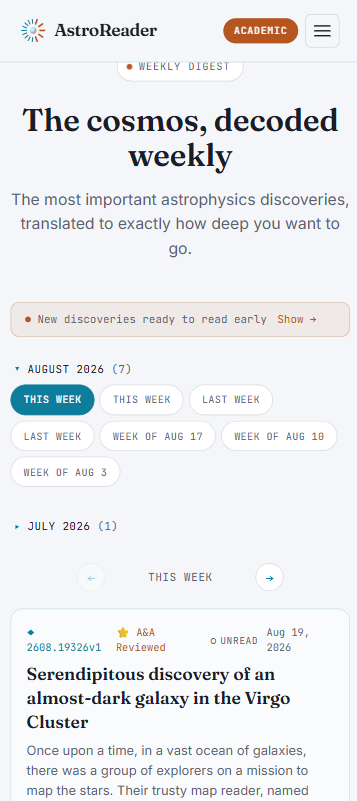
Every week, one plain-language paragraph per arXiv category on what the field actually found — not a list of titles, the findings themselves.
Read this week →Tonight's Sky
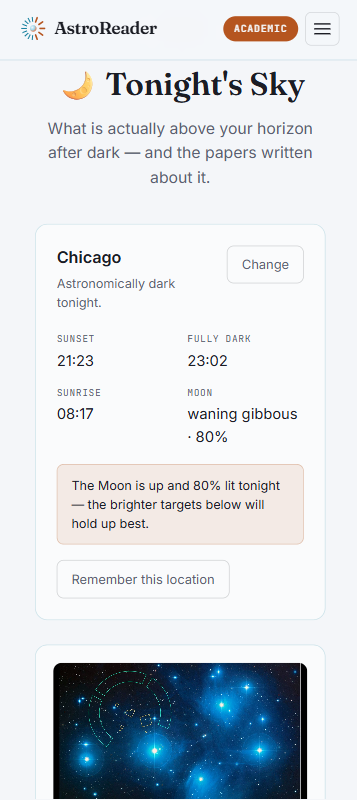
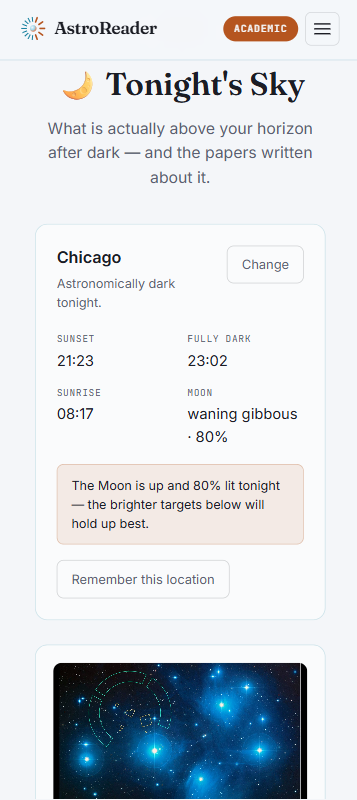
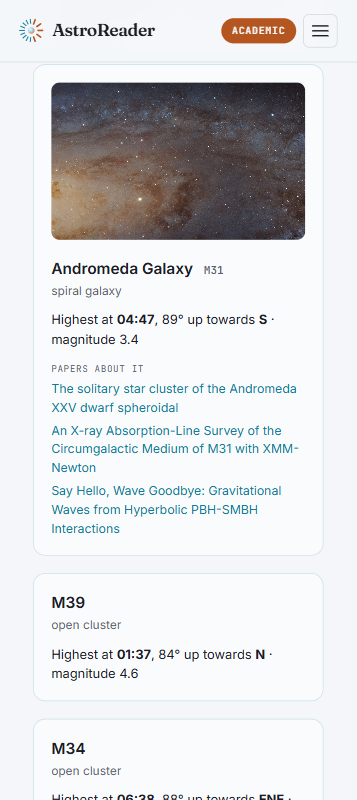
The digest is weekly; the sky is nightly. See what's actually visible from where you are tonight — moon phase, darkness window, and the objects worth going outside for — each linked to the papers written about it.
See tonight's sky →Sky Objects
A proper page for every catalogued object with an image or a paper written about it — an archive photo, when it's visible from where you are, and the arXiv research that studied it. "What is NGC 1300" gets an answer, not just a Wikipedia stub.
Browse sky objects →Weekly Digest
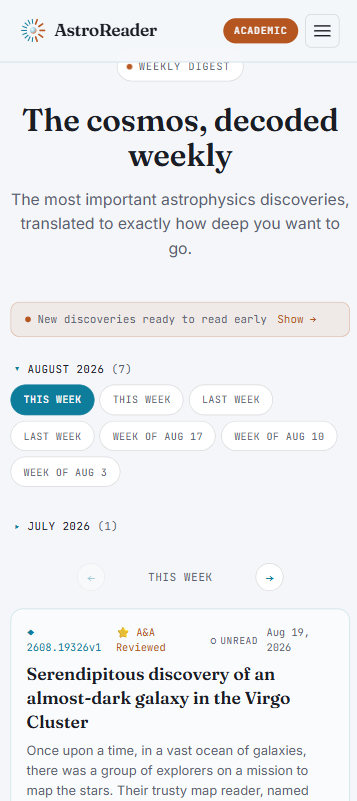
The most important astrophysics discoveries of the week, translated at your depth and delivered to your feed. Free account included, 3 issues a month — you choose how the email is written, and every paper can be favourited, rated and tracked as read.
Follow a Telescope
Every paper already carries the facility it credits. Follow JWST, Hubble, ALMA or any of the others and their papers land in one feed as they publish — plus an optional weekly email, one message a week however many you follow, never one per paper.
Cosmic Briefings
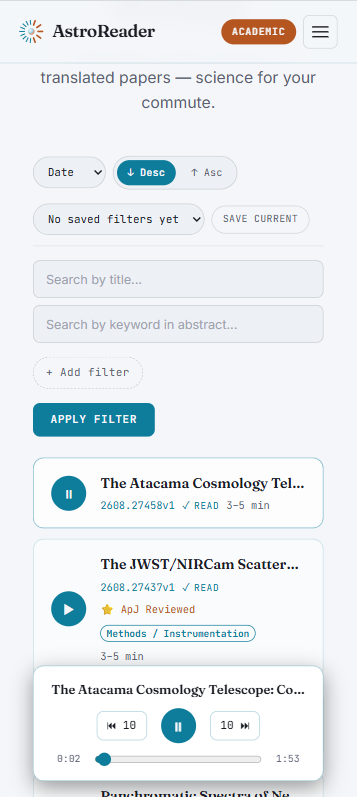
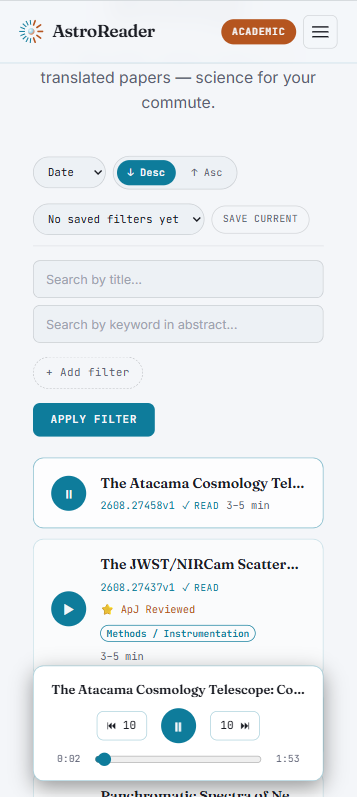
3–5 minute audio versions of translated papers — science for your commute.
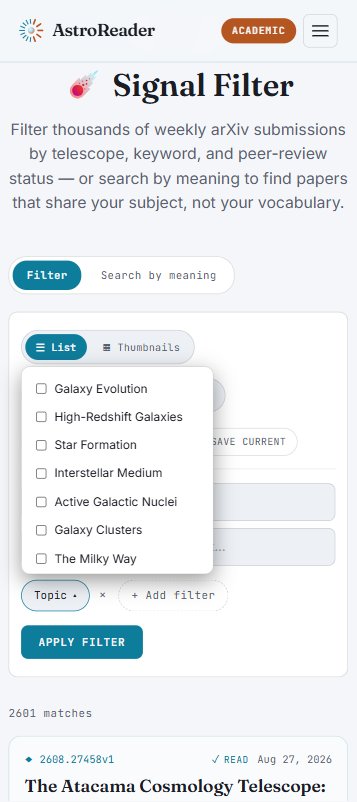
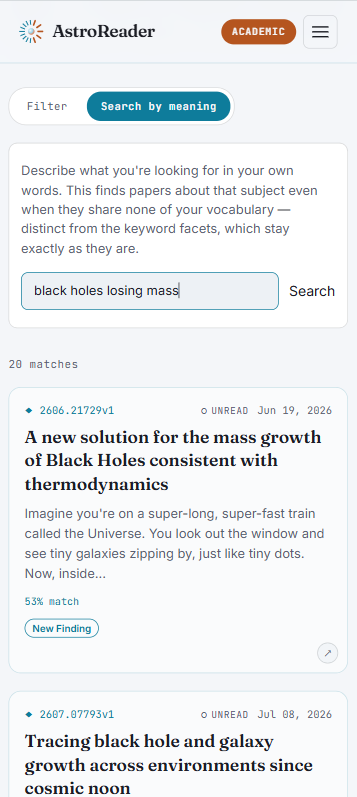
Signal Filter
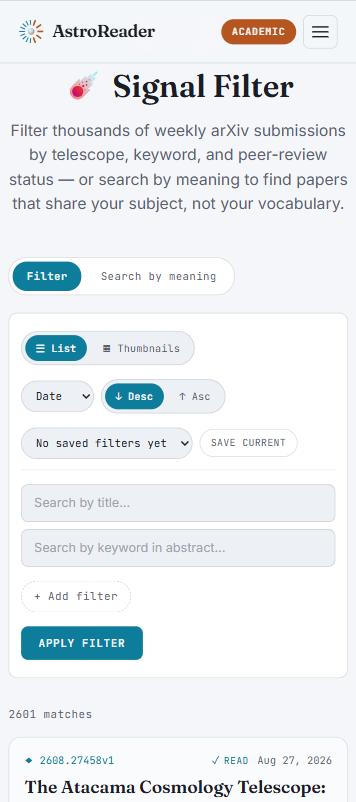
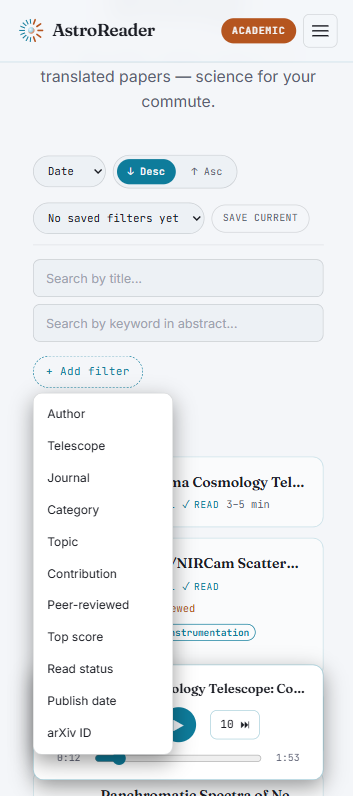
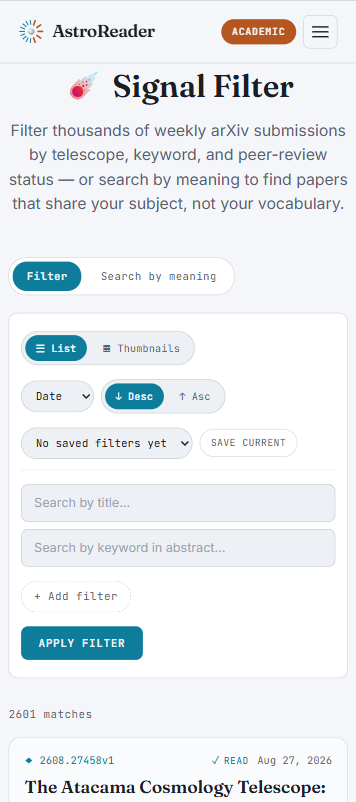
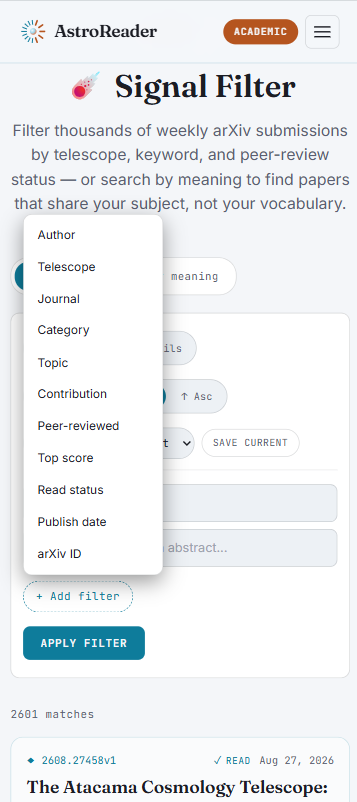
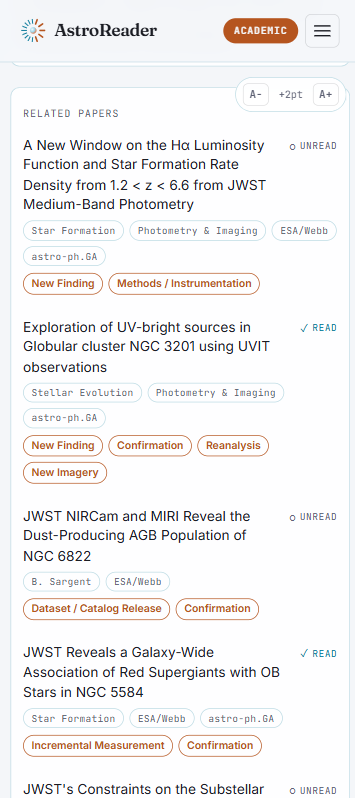
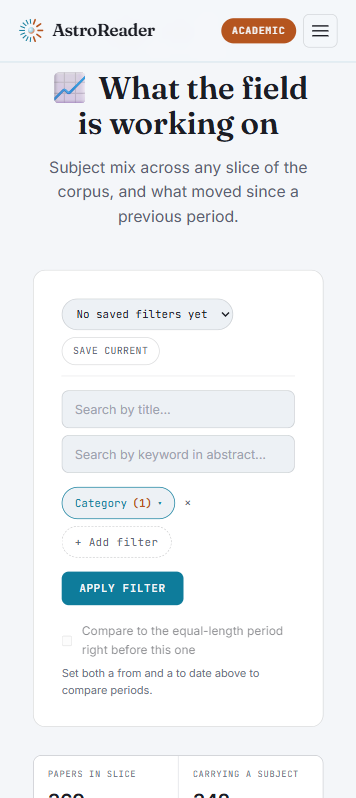
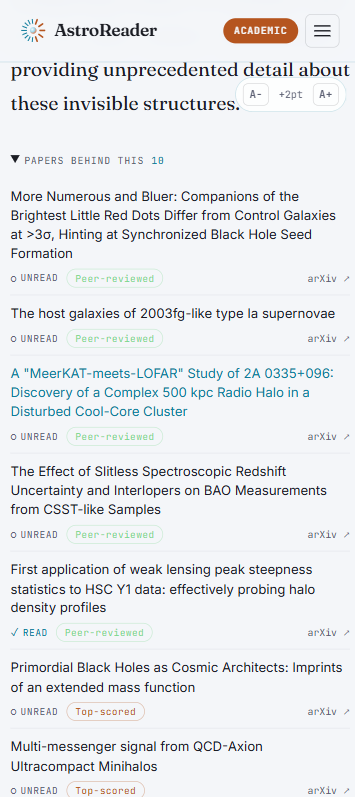
Filters thousands of weekly arXiv papers by telescope, subject, keyword and peer-review status — plus search by meaning, and a related-papers panel on every article that shows why each match surfaced.
Research Workspace
Pull the exact figures out of up to 10 papers at once, compare them in one table, and import your ADS library or .bib file.
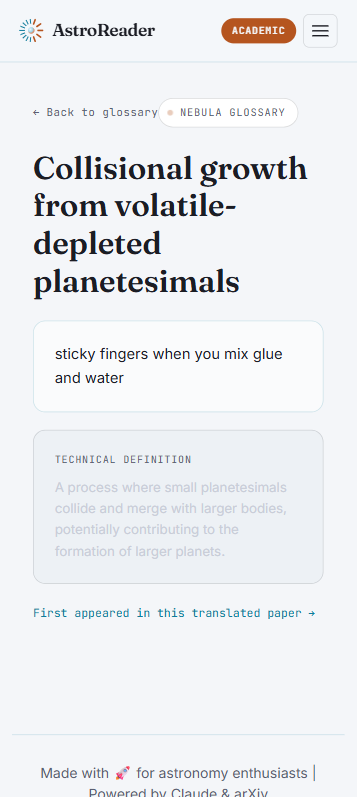
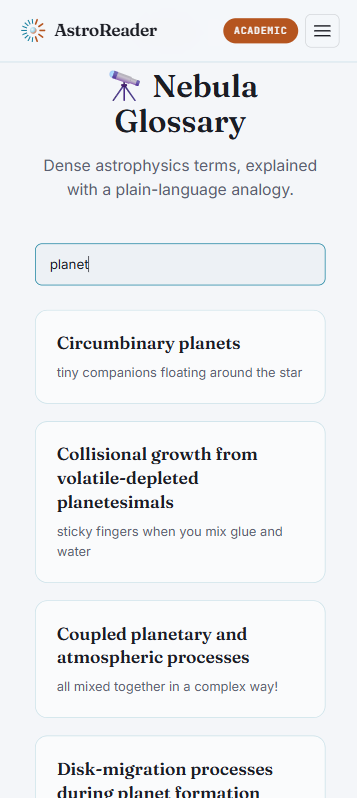
How it works →Nebula Glossary
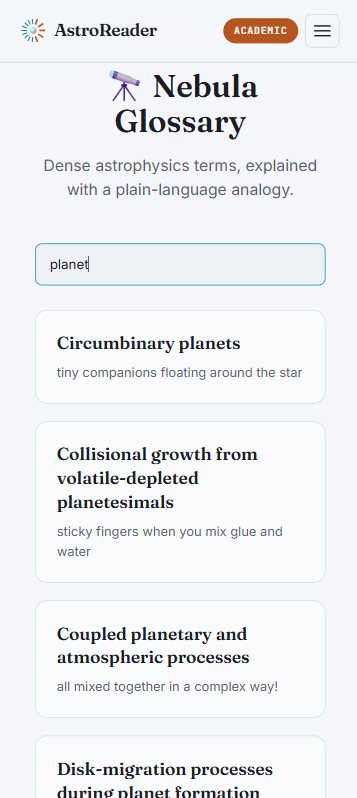
Tap any dense term while reading to get a plain-language analogy, instantly.
Browse the glossary →Solve today's case
A daily space mystery. Three gadgets, four suspects, one culprit — and it all really happened. Spend your gadgets, name the culprit, then meet the real paper the case was drawn from.
Play today's case →One new case a day, same for everyone